How Snap-In Dentures Can Restore Confidence and Comfort For Seniors

For many seniors, losing teeth can feel like losing a part of themselves — affecting not only appearance but the ability to eat, speak, and socialize with confidence. Fortunately, denture technology has evolved dramatically. One of the most exciting options today is the snap-in denture (also called implant-retained or overdentures). This solution combines the reliability of dental implants with the convenience and affordability of removable dentures, offering seniors a realistic, comfortable, and long-lasting way to restore their smile.
What are snap-in dentures?
Snap-in dentures are full or partial dentures that attach securely to small dental implants anchored in the jawbone. Instead of relying solely on suction or denture adhesive, snap-in dentures “snap” onto specialized attachments — commonly called ball- or locator-attachments — mounted on two or more implants. The result is a denture that stays firmly in place during normal activities but still detaches for cleaning and maintenance.
How do they work?
- Implant placement: A dentist or oral surgeon places two to four small titanium implants into the jawbone in strategic positions. These implants act as artificial tooth roots.
- Healing period: The implants need time to integrate with the bone (osseointegration), typically a few months. Temporary dentures can be used during healing.
- Attachment placement: Once healed, the clinician places the attachment components onto the implants. These parts provide the “snap” mechanism.
- Denture modification or fabrication: Your existing denture can often be retrofitted with matching housings, or a new overdenture can be made to fit the attachments precisely.
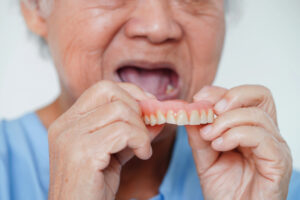
- Snap, remove, clean: The finished overdenture snaps into place securely for eating and speaking and is removed easily for nightly cleaning.
Benefits for seniors
1. Superior stability and confidence
Traditional dentures can shift, slip, or create embarrassing clicks while talking and laughing. Snap-in dentures dramatically reduce movement, giving seniors confidence when eating, speaking, or smiling in public.
2. Improved chewing ability and nutrition
Because snap-in dentures are firmly anchored, wearers can chew more effectively and enjoy a broader diet — including firmer fruits, vegetables, and proteins that might be difficult with conventional dentures. Better chewing helps digestion and overall nutrition, which is crucial for senior health.
3. Less bone loss and facial support
When teeth are missing, the jawbone gradually resorbs over time. Dental implants stimulate the bone much like natural roots, slowing bone loss and helping preserve facial structure. This support can reduce the sunken appearance some denture wearers experience as they age.
4. Easier maintenance than fixed implants
Fully fixed implant bridges (non-removable) are an excellent option but often cost more and require meticulous cleaning. Snap-in dentures offer many of the functional benefits of fixed implant restorations while remaining removable for simple at-home cleaning and periodic professional checks.
5. Predictable, relatively quick treatment path
Compared with more extensive implant rehabilitation, snap-in overdentures often require fewer implants (commonly two to four) and are therefore less invasive, faster, and frequently more affordable — while still delivering a major quality-of-life improvement.
6. Enhanced speech and comfort
Because the denture is stabilized, speech tends to be clearer and more natural. Also, there’s less gum irritation and sore spots caused by denture movement, improving overall comfort.
Who is a good candidate?
Many seniors who have struggled with unstable dentures are good candidates for snap-in dentures. Ideal candidates typically:
- Have adequate jawbone density at implant sites (or are willing to consider bone grafting if necessary).
- Are in generally good health (chronic conditions like diabetes can be managed in coordination with the dentist).
- Are non-smokers or willing to stop smoking during the implant process (smoking slows healing).
- Want improved denture stability but prefer a removable prosthesis.
A thorough dental exam, X-rays, and discussion of medical history will tell you if snap-in dentures are the right choice.
What to expect during recovery and adjustment
Most seniors tolerate implant placement very well. Some soreness, swelling, or minor bleeding is normal for a few days after surgery and is easily managed with pain medication and rest. After the implants integrate (usually several months), attaching the overdenture is straightforward.
Adapting to the new denture is quick. Many patients report a major increase in comfort and function within days of snapping the overdenture into place. Speech may need minor adjustment initially, and dietary habits can gradually expand as comfort grows.
Care and maintenance
Caring for snap-in dentures is simple:
- Remove and clean the denture daily (brush gently with non-abrasive paste and soak overnight if recommended).
- Brush around the implant attachments and gums twice daily.
- Visit your dentist regularly for professional cleaning and attachment checks. The attachment inserts wear over time and typically need replacement periodically — a simple, quick maintenance step.
- Follow any manufacturer or clinician guidance on adhesive use (often not necessary) and handling.
Costs and insurance considerations
Snap-in dentures are more expensive than traditional dentures but usually less than full fixed implant restorations. Costs vary by region, the number of implants, and whether new dentures are required. Many dental insurance plans cover part of the procedure; some providers offer payment plans or financing. Seniors should discuss costs, expected warranties, and maintenance fees with their dental team.
Long-term outcomes and quality of life
Clinical research and patient reports consistently show that implant-retained overdentures improve oral function, reduce bone loss, and increase patient satisfaction. For seniors, these benefits translate into eating more nutritious meals, speaking without anxiety, and reengaging socially — all of which support physical and emotional wellbeing.
Making the decision
If unstable dentures are limiting your life, a consultation with a qualified dentist or prosthodontist is the best first step. They’ll review your mouth, medical history, and lifestyle goals, and walk you through options — including whether snap-in dentures, fixed implant bridges, or other prostheses are the right fit.












Post Comment